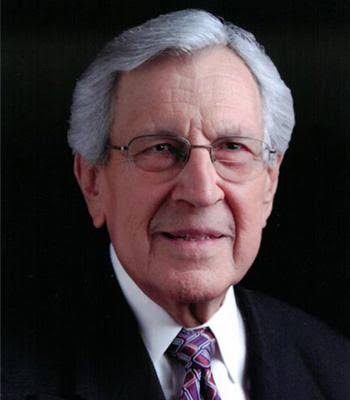
There is a difference between running a church and shepherding a church. The distinction sounds obvious until pastoral ministry becomes crowded with preaching schedules, budgets, meetings, buildings, programs, reports, crises, and expectations. Eugene L. Stowe’s The Ministry of Shepherding: A Study of Pastoral Practice, published by Beacon Hill Press in 1976, asks us to return to a more personal biblical image: the pastor as shepherd. It is a work of practical theology that reaffirms shepherding as a pattern for parish ministry.
That matters because Stowe was writing from inside Nazarene leadership. He served as president of Nazarene Theological Seminary from 1966 to 1968 and then entered the general superintendency in 1968, serving until 1993. A 1979 Nazarene publication summarizing his book emphasized his argument that the New Testament pattern of ministry is a person rather than merely an office, and that shepherding best describes pastoral care.
I find that important when we place Stowe beside the other general superintendents whose books form this larger historical collection.
Samuel Young’s God Makes a Difference (1954), written during his 1948–1972 tenure, moves through devotion, testing, commitment, service, redemption, and prayer. William M. Greathouse’s From the Apostles to Wesley (1979) examines holiness and Christian perfection. John A. Knight’s In His Likeness turns holiness toward transformed character. Jerald D. Johnson’s Mission to the World belongs to the story of Nazarene globalization, while Donald D. Owens’s Challenge in Korea grows out of missionary experience before his later general superintendency. Stan Toler’s practical pastoral guide approaches ministry from another generation. Carla Sunberg’s work on women and Christian vocation and T. Scott Daniels’s Embracing Exile raise questions of vocation and faithful engagement with culture. Filimão M. Chambo brings the story into a more globally diverse Nazarene church.
Read together, these leaders do not give us one definition of ministry. They give us a conversation. Stowe’s contribution is especially important because he asks what happens when the people themselves become the center of pastoral attention.
The biblical image is richer than the word “pastor” sometimes sounds in modern church vocabulary. In John 10, Jesus presents himself as the good shepherd who knows his sheep and lays down his life for them. In 1 Peter 5:2–4, elders are told to shepherd God’s flock willingly and by example, while Christ is called the Chief Shepherd. Ephesians 4:11–13 places pastors and teachers within Christ’s work of equipping the saints for ministry.
These passages complicate any attempt to reduce pastoral ministry to administration. Administration matters. Churches need organization, stewardship, planning, and responsible leadership. But biblical shepherding asks a deeper question: are the people actually being cared for, guided toward Christ, protected from spiritual danger, and equipped to serve?
That is where Stowe’s title becomes more than an attractive metaphor. Shepherding is a theological model of pastoral ministry. The congregation is not a program to manage; it is a people entrusted to spiritual care.
There is also a necessary caution. “Shepherding” does not mean that a pastor owns the flock or possesses unlimited authority over people’s lives. First Peter directs elders toward willing service and exemplary leadership, while Jesus remains the Chief Shepherd. Pastoral authority is therefore accountable, Christ-centered, and exercised for the good of the people.
The Church of the Nazarene’s current Manual remains within a Wesleyan-Holiness tradition and emphasizes Christlike living, holiness, and service. That fits naturally with Stowe’s concern, but the categories should remain clear: Scripture gives the primary biblical witness, the Manual expresses Nazarene teaching, and Stowe offers theological reflection on pastoral practice. I conclude that his emphasis remains a useful corrective wherever ministry becomes more concerned with programs than people.
What I appreciate about reading these eleven leaders together is the historical movement. Young and the earlier Christian-living writers ask what faith looks like in ordinary life. Greathouse and Knight probe holiness. Owens and Johnson illuminate mission and globalization. Stowe and Toler bring us back to pastoral ministry. Sunberg and Daniels raise questions of vocation and cultural engagement. Chambo represents a newer global dimension of Nazarene leadership. Across different decades, they return to one question: what does faithful Christian leadership look like when it reaches real people?
Stowe gives an answer that deserves to remain uncomfortable for us: a pastor can organize a great deal and still fail to shepherd. Programs can fill calendars without necessarily forming disciples. A successful ministry schedule is not the same thing as a spiritually cared-for congregation.
Perhaps that is why the shepherd remains such a powerful biblical picture. Sheep cannot be reduced to statistics, attendance figures, or ministry categories. They must be known, guided, protected, nourished, and led toward the Shepherd himself.
The ministry of shepherding, then, is not a rejection of programs or administration. It is a reminder of their proper place. The church has programs because it has people to serve. It has structures because people need faithful care. And pastors carry responsibility not merely to keep the institution moving, but to help people follow Christ.
That is what makes Eugene L. Stowe’s 1976 book worth placing in conversation with these other general superintendents. Behind their books and offices were leaders wrestling with an enduring question: how do we faithfully care for the people God has entrusted to the church?