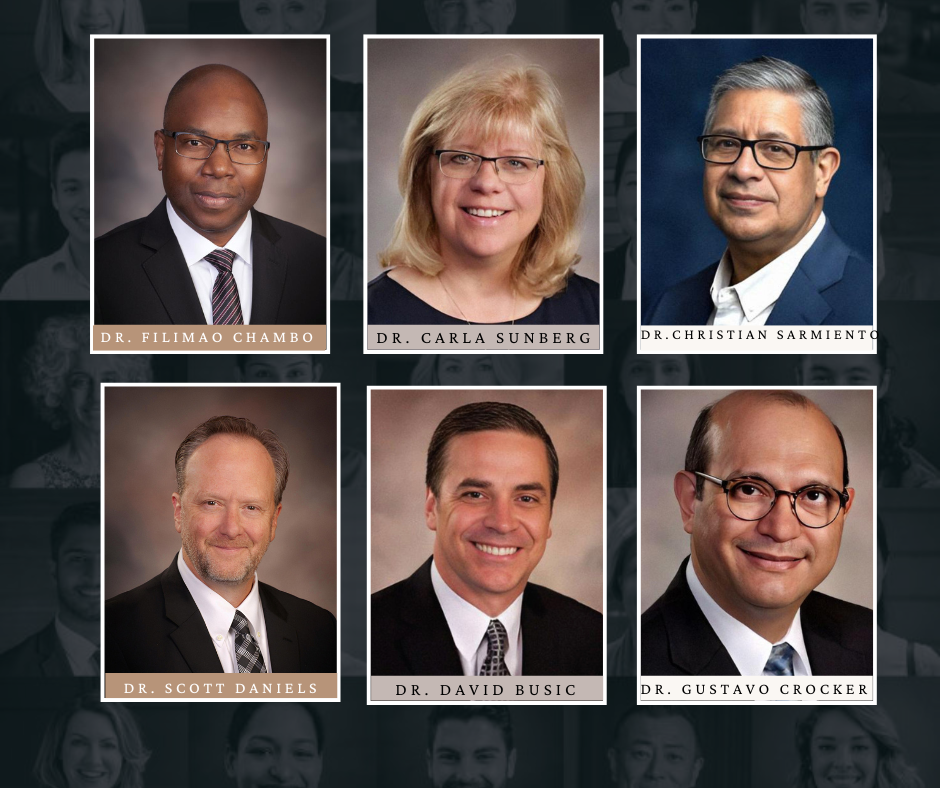
When I put these eleven books beside the names of the men and women who wrote them, I begin to see something larger than a reading list. I see a long conversation about what Christian leadership is supposed to do. These writers served as general superintendents across very different periods of Nazarene history, and their books touch Christian living, holiness, pastoral ministry, mission, globalization, women in ministry, and the church’s relationship with culture.
That makes me ask a more difficult question than whether these were influential leaders: What difference does Christian leadership actually make?
The question matters because a general superintendent is not simply an author who happens to hold a denominational title. The office carries ministry, oversight, representative, pastoral, and administrative responsibilities, although the balance of those responsibilities has changed considerably as the Church of the Nazarene has changed. So these books give us something unusual. They allow us to place published ideas beside the historical periods in which their authors were carrying responsibility for the church.
Christian living before leadership became the subject
James B. Chapman gives us an early doorway. His Christian Living in a Modern World appeared in 1942, while he was serving as a general superintendent. The book applies Christian principles to life in the modern world, and even its title raises a question that has not disappeared: What does following Christ look like when the world around the church keeps changing?
Twelve years later, Samuel Young published God Makes a Difference. Young was already six years into a general-superintendent tenure that would last from 1948 to 1972. His book was not a systematic theology. It was a collection of 52 devotional sketches organized around God, devotion, need, testing, commitment, service, redemption, and prayer.
That difference in approach is important. Chapman asks how Christian principles meet the modern world. Young asks how God makes a difference throughout ordinary Christian life. Yet both are wrestling with the same underlying question: Can Christian faith actually shape the way people live?
Young’s career also reminds me that leadership cannot be separated neatly from formation. Before becoming general superintendent, he had served pastorally, in district leadership, theological education, and as president of Eastern Nazarene College. His book appeared in the middle of his denominational leadership rather than before it. Even the fact that the book ends with prayer is revealing. Christian leadership, at least in this picture, does not finally rest on confidence in the leader. It rests on dependence upon God.
From holiness to shepherding
The conversation then moves into deeper theological territory. William M. Greathouse’s From the Apostles to Wesley, published in 1979 during his general-superintendent years, reaches backward through Christian history to examine holiness and Christian perfection. His work reminds us that Nazarene holiness theology did not begin in isolation. It participates in a much older Christian conversation about sanctification and the transformed life.
John A. Knight’s In His Likeness, published in 1975 before his 1985–2001 general-superintendent period, brings that question closer to Christian character. Holiness cannot remain merely a doctrinal phrase if God is forming a people who reflect his likeness.
Then Eugene L. Stowe gives us another side of leadership. His Ministry of Shepherding appeared in 1976, during his general-superintendent years and after his service in theological education. The shepherding image asks whether pastoral leadership is fundamentally about managing an institution or caring for people. Stan Toler’s Practical Guide for Pastoral Ministry, published in 2007 before his 2009–2013 general superintendency, approaches ministry from a more practical leadership angle.
I do not think these two approaches need to be enemies. A pastor may need organizational wisdom and still be a shepherd. The danger comes when administration becomes a substitute for pastoral care, or when the language of shepherding becomes an excuse for avoiding the responsibilities of leadership.
When leadership becomes global
Donald D. Owens and Jerald D. Johnson move the conversation beyond the local church. Owens wrote Challenge in Korea from his missionary experience in Korea years before becoming general superintendent in 1989. That chronology matters. His later leadership cannot be understood simply through a denominational office; his earlier cross-cultural ministry formed part of the perspective he carried into that office.
Johnson’s Mission to the World, published in 1988 during his 1980–1997 general-superintendent period, records another stage of the story. Nazarene mission was increasingly becoming a genuinely global movement, with local Christians interpreting and indigenizing Wesleyan teaching within their own cultures.
By the time Filimão Chambo and Carla Sunberg entered the general superintendency in 2017, that transformation was unmistakable. Chambo brought a Mozambican and African leadership experience shaped by pastoral ministry, theological education, and service as Africa Region director. Sunberg brought missionary, theological, educational, and pastoral experience and became the first second-generation general superintendent, following her father, Jerald D. Johnson.
The significance is larger than biography. The people carrying responsibility for the church increasingly reflected the worldwide body they were serving.
What kind of church are leaders preparing us to become?
Carla Sunberg’s Reclaiming Eve raises questions about women, calling, dignity, and participation in God’s kingdom. Filimão Chambo’s teaching on holy living connects holiness with transformed relationship with God and participation in God’s mission. T. Scott Daniels’ Embracing Exile approaches contemporary culture through the biblical image of God’s people living faithfully without assuming cultural dominance.
These are not identical questions. That is precisely why they belong together. Leadership does not mean producing one repeated answer for every generation. It means helping the church remain faithful while circumstances, cultures, questions, and even the geographic center of the movement change.
Scripture gives us a useful test. Jesus calls his disciples to be salt and light (Matthew 5:13–16), while Paul tells believers to be transformed by the renewing of their minds (Romans 12:2). Peter describes Christians as people living as “strangers and pilgrims” while still maintaining honorable conduct among those around them (1 Peter 2:11–12). These passages hold together two things we often separate: distinctiveness and presence.
That may be one of the deepest lessons in these eleven leaders. Christian leadership is not simply about protecting yesterday’s answers. Neither is it about chasing every new cultural question. It is about helping the church remain recognizably Christian while faithfully addressing the world in which God has placed it.
So, what difference does Christian leadership make?
After looking across these eleven books and leadership periods, I would not answer by pointing to one great achievement or one perfect model. The more interesting answer is that Christian leadership makes a difference when it keeps bringing the church back to its actual calling: holy living, faithful service, pastoral care, mission, theological depth, and witness in the world.
Chapman and Young asked what Christian living looks like in ordinary life. Greathouse and Knight pressed the holiness question. Stowe and Toler explored pastoral responsibility. Owens and Johnson widened the missionary horizon. Sunberg, Chambo, and Daniels speak into questions shaped by a global church and a changing culture.
Their contexts differ, and their emphases should not be flattened into one message. But together they remind me that leadership is finally tested by what kind of people and what kind of church it helps form.
That brings me back to the question I started with. What difference does Christian leadership make? Perhaps the deepest answer is not how many structures a leader manages or how many books a leader writes. It is whether, through changing generations, the church is helped to become more faithful to Christ, more deeply holy, more ready to serve, and more capable of bearing faithful witness in the world.