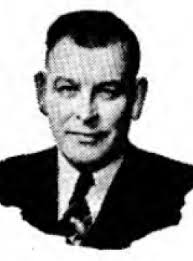
When Samuel Young published God Makes a Difference in 1954, he was not writing as an unknown observer of Nazarene life. He was already serving as a general superintendent, an office he would hold from 1948 until 1972. The book was his first, and the Nazarene publishing advertisement described it as fifty-two inspirational sketches covering eight areas: Our God, Our Devotion, Our Need, Our Testing, Our Commitment, Our Service, Our Redemption, and Our Prayers.
That matters because Young was asking a very ordinary Christian question: If God is real, where should that reality become visible in the way we live?
I think that question helps explain the word youngness in this title. I do not mean that Samuel Young was young. I mean the freshness of a Christian life that has not become merely familiar with its own language. Christian living becomes young again whenever we stop assuming that words such as faith, holiness, prayer, service, and devotion have already done their work simply because we can say them.
Samuel Young was more than the man who wrote the book
Young’s general superintendency did not begin with his writing career. Before becoming general superintendent in 1948, he had served as a pastor, district superintendent, theological educator, and president of Eastern Nazarene College. He therefore entered the office carrying experience from several parts of Nazarene life.
His twenty-four years in the general superintendency were also substantial. That office involved much more than being a public preacher or denominational spokesman. General superintendents carried pastoral, supervisory, representative, and administrative responsibilities, although the balance of those responsibilities changed as the Church of the Nazarene changed.
This is important when reading God Makes a Difference. The book should not be treated as a complete portrait of Young’s administration. Neither should his administration be separated from the spiritual questions visible in his writing. They belong beside one another.
In fact, the chronology is striking. Young became general superintendent in 1948. His book appeared in 1954, six years into that responsibility, and he remained in the office until 1972. This was not a book written before leadership became complicated. It was written while he was living inside a demanding season of church leadership.
What did Young mean by a difference?
The 1954 promotion for the book gives us a helpful clue. It did not restrict God’s influence to Sunday worship or private devotion. It spoke about social, business, home, and church life, as well as financial, physical, and personal concerns. It described inward effects such as peace, confidence, courage, and love, and outward qualities such as helpfulness, tolerance, and righteousness.
That is a much larger claim than saying that Christianity gives a person comforting beliefs.
Young was presenting Christian faith as something that reaches into the compartments of ordinary existence. That sounds familiar to us, but perhaps that familiarity is exactly why the question deserves to be asked again.
James gives the same challenge in different words: Christians are not to be hearers of the word only, but doers of it (James 1:22). Paul speaks of transformation through the renewing of the mind (Romans 12:2). The New Testament does not present faith as information stored safely inside a believer. It expects faith to become visible in life.
The Church of the Nazarene later expressed this within its Wesleyan-Holiness identity through its emphasis on holy living, entire devotion to God, and entire sanctification. But Young’s book is not a formal doctrinal statement. It is devotional. That distinction matters. He was not trying to replace theology with inspirational writing. He was asking what Christian convictions look like when they reach a person’s actual life.
The general superintendent who ended with prayer
One detail about the book has stayed with me more than the list of subjects. Its final section is devoted to prayers.
That is significant because Young was writing about Christian living while carrying considerable responsibility. A later Nazarene remembrance of Young connected his spiritual commitment with his writing and specifically remembered the prayers at the end of God Makes a Difference. The prayer material included requests for wisdom, honesty about personal failures, help in dealing with troubled people, and strength in temptation.
There is something quietly important here. The person speaking about Christian living was not presenting himself as someone who had outgrown his need for God. The book ends by turning toward God.
That changes how I read the title. “God makes a difference” is not finally a claim about having better religious ideas. It is a claim about dependence. If God really makes a difference, then prayer belongs in the story because Christian living is not simply the achievement of a disciplined person.
The question did not belong only to Young’s generation
Young was not asking the question in isolation. James B. Chapman’s Christian Living in a Modern World had appeared twelve years earlier, in 1942. Chapman was asking how Christian principles applied to life in the modern world. Young, in 1954, was asking how God’s reality reaches into the whole of personal and practical life.
The wording changed. The problem remained.
And that is one reason I find these older Nazarene books worth reading. The world around the church changes quickly, but Christians continue to face the same deeper question: What difference does the gospel actually make to the way we think, choose, suffer, work, serve, forgive, pray, and live with other people?
We should not romanticize Young’s era. His generation had its own limitations, blind spots, and historical circumstances. Nor should we assume that because a book is old, its language automatically solves our problems. But neither should we dismiss an older Christian voice simply because its vocabulary comes from another generation.
What Young still asks me to see
For me, the lasting value of God Makes a Difference is not that Samuel Young discovered a question Christians had never asked. It is that he refused to let the question become too complicated.
Christian living eventually comes back to ordinary life.
Does God make a difference in the way I treat people? In the way I respond to pressure? In the way I handle responsibility? In the way I pray when I do not know what to do? In the way I serve when nobody notices? In the way my convictions become character?
Those questions are still alive.
Perhaps that is the youngness I see in Young’s Christian living. It is the willingness to ask an old Christian question as though it still matters. And it does.
A faith that never reaches ordinary life may remain impressive in language while becoming strangely youngless in practice. Young’s little book points in the opposite direction. It asks us to look again at the places where Christianity becomes visible—and to ask honestly whether God really makes a difference there.