 When a Nazarene general superintendent writes a book about holiness, it is tempting to read the book simply as a statement about his denomination. William M. Greathouse’s From the Apostles to Wesley asks a larger question. Published in 1979, during Greathouse’s years as a general superintendent, the 124-page book traces Christian perfection through major periods of Christian history toward John Wesley. Its central argument is that holiness and Christian perfection did not suddenly appear with the nineteenth-century Holiness Movement. They belong to a much older Christian conversation.That matters because the title contains a question many of us may have quietly assumed has an obvious answer: did Wesley start this holiness idea?I think Greathouse gives us good reason to answer no—with an important qualification. Wesley did not invent the biblical call to holiness. He did, however, develop a particular theological account of Christian perfection that became especially influential in the Wesleyan tradition.
Greathouse was more than the author of this book
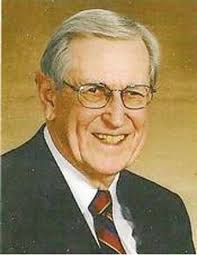
To understand why Greathouse approached the question this way, remember the man behind the book. He served as a Nazarene pastor, became president of Trevecca Nazarene College in 1963, then president of Nazarene Theological Seminary in 1968, and was elected general superintendent in 1976, serving until 1989. A scholarly tribute describes his seminary years as especially important to his concern for recovering the church’s Wesleyan heritage.So From the Apostles to Wesley was not written by someone discovering Wesleyan theology from a distance. Greathouse had spent decades preaching, teaching and helping shape Nazarene theological education before carrying the wider responsibilities of the general superintendency. His 1979 book belongs inside a period of active Nazarene leadership.
The word “perfection” needs rescuing
Part of the difficulty is the word perfection itself. Modern readers can hear “Christian perfection” and imagine absolute flawlessness—never making a mistake, never being ignorant, never being tempted.That is not the only meaning the Christian tradition has given the term.Jesus says, “Be perfect, therefore, as your heavenly Father is perfect” (Matthew 5:48). Hebrews tells believers to “go on to perfection” (Hebrews 6:1). Paul can speak of believers as “perfect” while also saying, “Not that I have already obtained all this” (Philippians 3:12).These passages create a tension. Christian maturity can be real without meaning that Christians become omniscient or finished products. In Wesleyan language, perfection is connected with love and wholehearted devotion to God, not becoming God.Wesley himself insisted that absolute perfection belongs to God alone. He connected Christian perfection with “perfect love,” drawing especially on 1 John 4:18. That helps explain why Greathouse’s historical approach matters: the word must be understood within the theological conversation surrounding it.
Wesley did not create the question
If Scripture already calls God’s people toward holiness, maturity and love, Wesley did not create the question. The early church wrestled with it, and Christian theologians continued wrestling with it through the centuries. Greathouse follows that conversation rather than telling the story as though holiness began when Wesley arrived.There is a fair caution, however. Saying Christian perfection has a long history does not mean every Christian writer before Wesley meant exactly what Wesley meant. “Perfection,” “holiness,” “sanctification,” and “maturity” can overlap without being identical theological concepts.
Where Nazarene theology enters
The Church of the Nazarene describes sanctification as God’s work of transforming believers into Christ’s likeness. Its teaching on entire sanctification speaks of entire devotion to God and the perfection of holy love, while also describing the continuing work of the Holy Spirit.That fits naturally within the Wesleyan-Holiness tradition, but I think we should not confuse denominational formulation with Scripture itself. Scripture supplies the foundation and vocabulary; Wesleyan theology interprets that witness in a particular tradition; Nazarene doctrine gives that tradition an official expression.Greathouse’s historical question therefore reaches beyond Nazarene identity. It asks whether Christians can trace the pursuit of holy love farther back than the movement with which Nazarenes are most familiar.
Why this book still matters
What I appreciate about Greathouse’s question is that it prevents us from treating holiness as a denominational possession.The Christian call to holiness is older than the Nazarene movement, older than the nineteenth-century Holiness Movement, and older than Wesley. Yet Wesley’s contribution still matters because he became one of the most important interpreters of that question and gave the Wesleyan tradition a distinctive theological shape.So, did Wesley start the holiness question?No—not if “start” means inventing Christianity’s call to holy love, spiritual maturity and transformation. The biblical witness is already there, and Christian history shows a much longer conversation.But Wesley did become a significant interpreter of that question. Greathouse’s book helps us hold both truths together.Our holiness theology should not begin with our denomination’s history. It should begin with the larger Christian story, listen carefully to Scripture, learn from the church across the centuries, and then ask how we should faithfully live what we have received.