Holiness can become one of those Christian words that everyone recognizes but few people can describe without using another Christian word. We speak about being holy, sanctified, consecrated, or Christlike, but a natural question remains: What would holiness actually look like if we could recognize it in a person’s life?
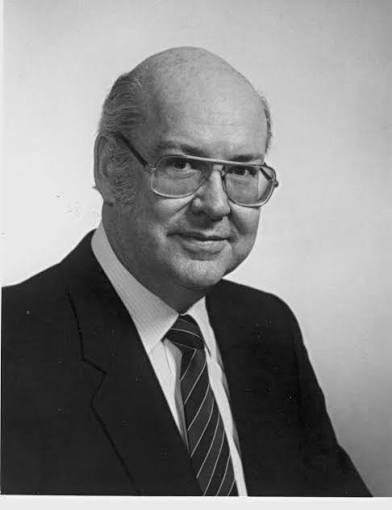
That question sits close to the heart of Dr. John A. Knight’s In His Likeness: God’s Plan for a Holy People. Published by Beacon Hill Press in the mid-1970s, the book approaches holiness through the language of God’s likeness and the formation of a holy people. Library records date an edition to 1976, while some bibliographic records list 1975, so the safest point is that the book belongs to the mid-1970s. It was written before Knight became a general superintendent, but it helps us understand the theological world he carried into that later ministry.
And that matters because Knight was not only an author. He served as a pastor, college professor and president, edited the Herald of Holiness, and eventually served as a general superintendent from 1985 to 2001. During his years in that office, his writing and preaching continued to engage questions of Christian character, compassion and holy living. A 1987 Herald of Holiness article, for example, carried Knight’s name as general superintendent while reflecting on Christ’s compassion as something that moves a person toward action. His leadership years therefore give the book a larger setting: holiness was not merely a doctrine he could explain; it was a theological question being carried into the life of the church.
The phrase “In His Likeness” points us back before denominational language, to the biblical idea that human beings are created in God’s image. Genesis 1:26-27 establishes that foundation. But the New Testament takes the theme somewhere even more demanding. Romans 8:29 speaks of believers being conformed to the image of Christ. Second Corinthians 3:18 describes believers as being transformed into that image by the Spirit. Ephesians 4:24 speaks of the new self being created according to God’s likeness in righteousness and holiness, while Colossians 3:10 describes the new self as being renewed in the image of its Creator.
Notice what happens when these passages are read together. Christian holiness is not simply about avoiding certain actions. Neither is it merely an inward religious experience that remains invisible to everyone else. Scripture connects God’s work in us with a recognizable transformation of life. The goal is likeness: becoming increasingly shaped by the character of Christ.
This is where I find Knight’s title particularly challenging. If holiness is God’s work of restoring His image in us, then the question is not simply, “Have I experienced sanctification?” It is also, “What is that sanctifying grace producing in me?”
The Church of the Nazarene’s Wesleyan-Holiness tradition makes a similar distinction. Its present theological statement describes holiness as Christlikeness and says the Holy Spirit transforms believers into a people marked by love, spiritual discipline, compassion, justice and moral purity. Nazarene teaching also distinguishes the crisis of entire sanctification from the continuing work of growth in grace. That distinction matters. A moment of consecration cannot be separated from the life that follows it.
This also prevents a common misunderstanding. To say that holiness should be recognizable does not mean that Christians become flawless, impressive or incapable of failure. The New Testament’s language of transformation includes continuing renewal. Second Corinthians 3:18 speaks of being transformed “from glory to glory,” and Colossians 3:10 describes a new self that is being renewed. Holiness is therefore both God’s gracious work and a life increasingly shaped by that work.
There is another important question. Could emphasizing recognizable holiness turn Christianity into moralism? It could, if we begin with outward performance and forget grace. But the biblical order moves in the opposite direction. God acts first. Christ is the pattern. The Spirit transforms. Christian conduct becomes the visible fruit of that deeper work. Jesus’ teaching in John 15 about abiding in Him makes the same basic point: fruit grows from relationship with the vine.
That distinction helps me read Knight alongside other Nazarene leaders in this collection. William M. Greathouse looked backward through Christian history to explore holiness and Christian perfection. Eugene Stowe used the shepherding image to think about pastoral ministry. Samuel Young asked what difference God makes in ordinary Christian life. Later leaders such as Filimão Chambo have spoken of holy living in connection with restored relationship with God and participation in God’s mission. The subjects differ, but a thread begins to appear: holiness is never meant to remain safely inside a doctrinal definition.
Knight’s later general-superintendent years make that thread especially interesting. The office involved far more than writing books. General superintendents carried pastoral, ecclesial, representative and administrative responsibilities, and the church itself was changing significantly during Knight’s 1985-2001 tenure. Nazarene ministry was becoming increasingly global, and the church was learning how to live faithfully across cultures and contexts. In that setting, the question “What does holiness look like?” becomes larger than personal spirituality. It becomes a question about what kind of people the church is becoming.
So, what if holiness is meant to be recognizable?
I think the question deserves a careful yes, with an important qualification. Holiness should be recognizable, but not because Christians are trying to advertise their spirituality. It should be recognizable because the character of Christ is becoming visible in ordinary human relationships, choices, service, compassion, humility, obedience and love.
That may be the enduring challenge behind In His Likeness. Holiness is not simply something we claim to possess. If God is restoring His image in us, something should gradually become visible. The evidence is not perfection on display. It is a life increasingly taking the shape of Jesus.