Paul gives us a sentence that seems almost designed to make this subject difficult: “Work out your own salvation,” followed immediately by the explanation that “it is God who works in you. The tension in Philippians 2:12-13 is one reason the Nazarene understanding of free will cannot be reduced to a simple statement about human independence.
John Wesley returned to this passage when explaining the relationship between divine grace and human response. He did not see God’s work in the human person as a reason to stop speaking about human responsibility. For Wesley, God’s grace was precisely what made meaningful response possible.
That is close to the question behind this article. If God is working in us, what does it mean for us to choose? And if our choice is genuinely ours, how can we say that grace comes first?
The Nazarene tradition answers those questions within its doctrine of prevenient grace. Fallen humanity is not understood as possessing enough natural strength to turn to God and prepare itself for faith. At the same time, grace is not presented as making the human response irrelevant.
It enables the response.
The Nazarene understanding of free will therefore asks us to hold together two ideas that are often pulled apart. Human beings remain morally responsible, but they are not spiritually self-sufficient. God acts, and people really respond.
That is the tension I want to examine through Scripture. The goal is not to make every passage say exactly the same thing, but to see how the biblical witness speaks about choosing, responsibility, sin and grace. The result may be more careful than the phrase “free will” first suggests.
One of the easiest ways to misunderstand Arminian theology is to hear the words “free will” and imagine that everything begins with the human being. That is not the argument I find in the classical sources. The more careful question is whether human beings can make a morally meaningful response to God while admitting that the ability to make that response is itself dependent upon grace.
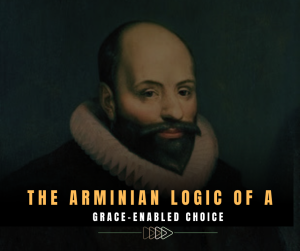
That distinction takes us back beyond the Church of the Nazarene to Jacobus Arminius. Writing in the early 1600s, Arminius argued that fallen humanity could not begin or perfect true spiritual good without divine grace. His position therefore contained an important limitation from the beginning: freedom did not mean spiritual independence.
Human willing remained real, but grace was necessary for the will to move toward God in saving good.
The biblical picture begins even earlier. Genesis 1:26-27 grounds human dignity in creation in God’s image, while Genesis 2:16-17 shows humanity receiving a command with genuine moral consequence. Deuteronomy 30:19 speaks directly about choosing life, and Ezekiel 18:30-32 calls people to repent and turn from their transgressions.
Scripture therefore has no difficulty addressing people as responsible agents.
But responsibility is not the same thing as self-sufficiency. That is where the Wesleyan contribution becomes especially helpful. John Wesley, writing in the eighteenth century, inherited the Arminian concern about human responsibility but placed it within a strong doctrine of grace.
In “The Scripture Way of Salvation,” he described preventing grace as God’s prior work in the soul. It awakens desire, brings light and produces conviction before the person has arrived at the fullness of saving faith.
I think that historical sequence helps explain why the Nazarene doctrine can sound paradoxical without actually being incoherent. Human beings are created for meaningful moral response, yet fallen humanity cannot simply climb its way back to God. John 4:10-14 portrays Jesus as the giver of living water, reminding us that what the human person receives originates in Christ rather than in human spiritual resources.
Then John 6:44 adds an uncomfortable qualification for anyone who wants to make free choice the centre of the story: Jesus says that no one can come unless the Father draws that person. Yet John 1:12-13 still speaks of receiving Christ and believing in his name while grounding the new birth in God. The biblical tension remains intact.
Human response matters, but divine initiative remains prior.
Wesley’s reading of Philippians 2:12-13 makes the relationship even clearer. God works in the believer, and therefore the believer works. Grace does not replace human action; it makes faithful action possible.
That is the logic I think the phrase “grace-enabled choice” captures better than the broader and easily misunderstood phrase “free will.”
The Nazarene claim, then, is not that fallen people possess an untouched natural power to save themselves. Nor is it that God’s grace turns people into passive objects who have no meaningful response. It is that God’s grace reaches the person first and enables a response that remains genuinely human.
That leaves us with the more practical question: if grace is already at work before faith, what does a person actually experience and do when that grace calls for a response?